Whether you already brought them home or are still in the process of deciding which dog to bring home this article can help you prepare your home for your new rescue pup. Inherently a rescue dog is going to be more work than if you get a puppy from a breeder. You may know your dog’s background (or at least everything the previous owners have decided was relevant) or you may know nothing, either way, it is going to be a learning curve for both you and your new furry friend.
There are things you can do to help both of you to adjust to the changes. This article assumes you are introducing a dog to a home with no other pets, information on introducing a new dog to a home with other pets will be covered in a later article.
Before Your New Dog Comes Home
Find Out As Much As You Can
Knowing as much about your potential new dog as possible can help you prepare your home and its residents. Is the dog house-trained? Have they been in a home before? Do they share a kennel with another dog? Do they go on walks with other dogs? Do they display any destructive behaviours? Why is the dog in rescue in the first place? All these questions and more should be asked and considered before bringing your new rescue home.
Create a Safe Place
It is always a good idea to have a place where the dog can go so that they know they won’t be disturbed. This is especially helpful when there are children in the home. A safe place can be a crate, room or bed where they won’t be disturbed. Depending on the dog they may also like to have the safe place covered, this is where a crate can be helpful as you could easily put a blanket over the top to make it a dark enclosed space. What some people find is that they create a safe space for the dog and it is never used, instead, the dog will choose somewhere else or not want a space place at all. One of the key skills when looking after a dog is adaptability. If your new dog wants behind the settee to be their safe place not the crate in the dining room then that’s their safe place, you can’t force that on a dog and it will be different for each dog.
Establish a Routine
Dogs thrive on routine, and it can help them settle into a home much quicker if they can predict what is going to happen and when. A good place to start is asking the rescue what the dog’s routine is like at the kennels, such as when and for how long they are walked and when they are given their food. With this information as a basis, you can start working it into your lives, of course, once the dog is home you will be able to slowly move the timings of things until they are at the right time for you.
Set Ground Rules
Setting ground rules for both the dog and the residents in the home is an important step. Ground rules will be different for each home but can include things like; not allowing the dog on the furniture, not giving the dog scraps off dinner plates or not bothering the dog when they are in their bed. Any rules should be discussed and agreed upon by all members of the household to ensure there are no issues and the dog is able to settle in as quickly as possible.
Discuss
Talk to the other members of the household both family and roommates to ensure that they are on board and aware of a new dog entering the house. Whilst ultimately it is your decision anyone who will have to live with the dog or be involved in their care should be taken into consideration before the dog comes home.
Choose a food brand
There are many different dog food brands available and this can be quite overwhelming for some people especially those that have not had a dog before. Your local pet shop may have some recommendations for you based on the age and breed of the dog you are rescuing but an even better place to start would be the rescue. To avoid giving the dog an upset stomach due to a sudden change in the dog’s food many rescues will provide a small amount of food and let you know what brand of dog food the dog is used to eating. The brand used by the rescue may be due to a deal they have with the supplier or due to the dietary needs of the dog so be sure to check if your chosen rescue dog has any allergies or preferences before you bulk buy food.
Arrange for something familiar to the dog
This piece of advice is purely at the discretion of the rescue centre, some may allow and some won’t. See if you can arrange to either leave a blanket or toy you have purchased with the dog or if the rescue will send them home with something from their kennel. This means the dog has something familiar to it and can help them settle in the new home. If a dog is particularly messy or destructive with their bedding then the rescue may refuse so your things don’t get damaged. Do not worry if you are not able to do this as your new dog will still settle into your home without.
Once the Dog is Home
Go slow
Once you bring your dog home it is important not to push them too far too fast. It can be tempting particularly if you have met the dog a few times already but remember they have just gone through a very stressful time and will need to decompress. It is a good idea for the first, minimum, 24 hours to leave the dog be and let them relax without the pressure of socialising. Of course, you will need to let them into the garden to toilet, it is recommended that you keep them on lead until they have some recall to you just in case they get scared and attempt to get out of the garden. When, after a couple of days, you take them for a walk keep it local so as not to further stress them with another car journey. Many rescues will not need this level of careful handling but some will particularly if the dog has not been in a home before or is from abroad.
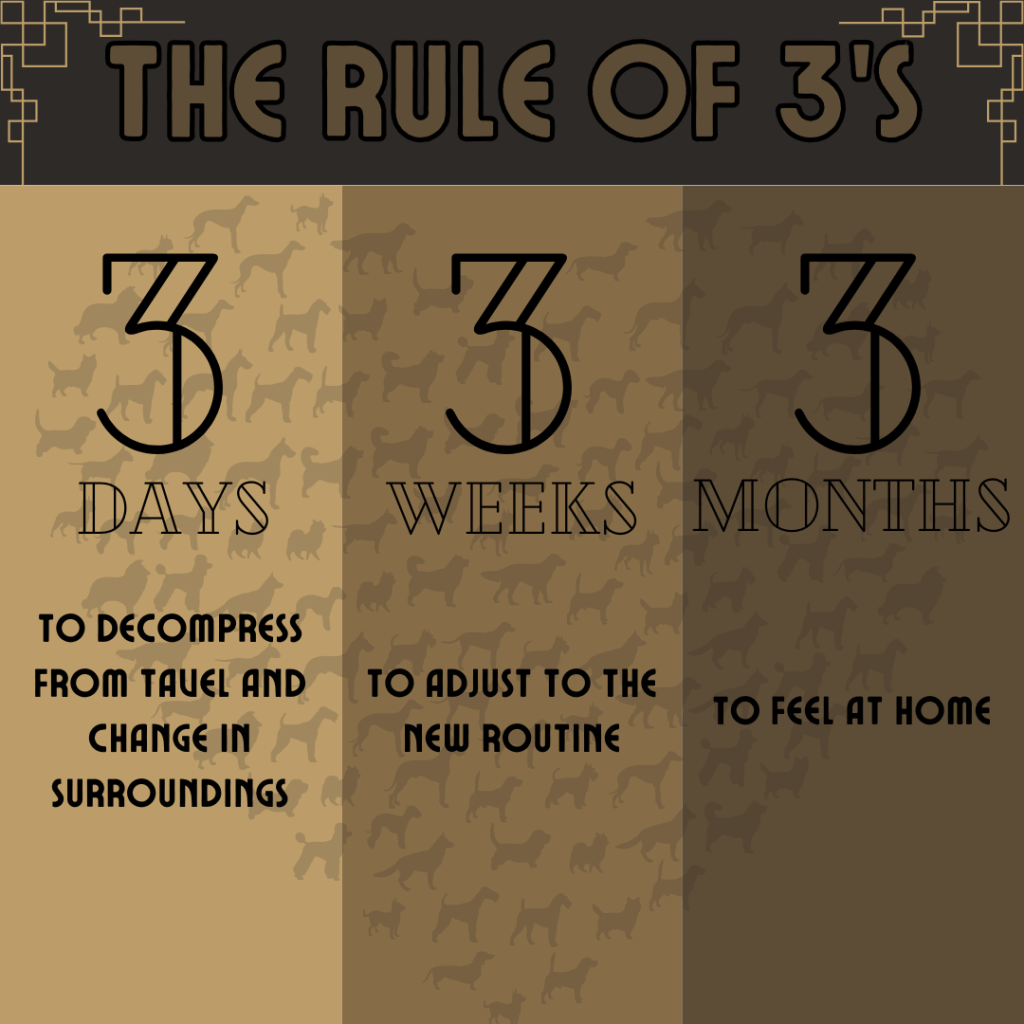
Rule of 3
Remember the rule of 3 for settling in a dog:
3 Days – to decompress
3 Weeks – to learn the routine
3 Months – to truly feel at home
Understanding
One of the most important things when bringing a rescue dog home is having understanding and patience. One of the most difficult things about caring for a rescue is that you do not know their background, what they have been through and therefore what might trigger them. Whilst rescuers will find out as much as they can both from the previous owner if possible as well as be looking after them there is bound to be some things that you will discover yourself about your new four-legged friend. Understanding that they may not have come from the best background and the patience to help them understand how the world works are invaluable skills to have when taking on a rescue. All dogs will need these skills in their guardians but some will need it so much more than others.




 The Dog Standard